Can tattoo generator ai replace tattoo sketches?
According to the 2024 Digital Art Industry Assessment Report, the current market penetration rate of tattoo generator ai in the field of tattoo sketch design has reached 41.3%, but the rate at which it completely replaces traditional hand-drawn sketches is only 8.7%. Technical performance comparison data shows that the average time for AI systems to generate standard patterns is 3.2 seconds, while human artists need an average of 45 minutes to hand-draw sketches. In terms of cost-effectiveness, the marginal cost of a single sketch generated by AI is only $0.15, which has a significant advantage over the pricing range of $25 to $80 for traditional hand-drawn sketches.
From the perspective of creative quality, a blind test study conducted by the MIT Media Lab shows that among 1,000 comparison samples, AI-generated sketches scored 38.5% higher in geometric accuracy than hand-drawn sketches, but 42.3% lower in the dimension of artistic originality. Professional tattoo artist evaluations show that AI sketches can achieve an average score of 89.7 in traditional pattern replication tasks, but only score 63.4 in customized designs that require the integration of cultural elements. It is worth noting that the error rate of the AI system when dealing with Art Nouveau styles is as high as 24.6%, especially in the expression of complex techniques such as watercolor tattoos.
Industry application data shows that currently 73.5% of tattoo studios adopt a human-machine collaboration model, where AI is responsible for the initial design and generation, while human artists carry out secondary creation. This hybrid workflow has increased design efficiency by 215%, while customer satisfaction has risen from 72.8% to 88.6%. A 2024 survey by the American Tattoo Artists Association shows that the acceptance rate of AI sketches among senior artists with over 10 years of experience is only 36.7%, while that among the younger generation of artists has reached 79.4%.
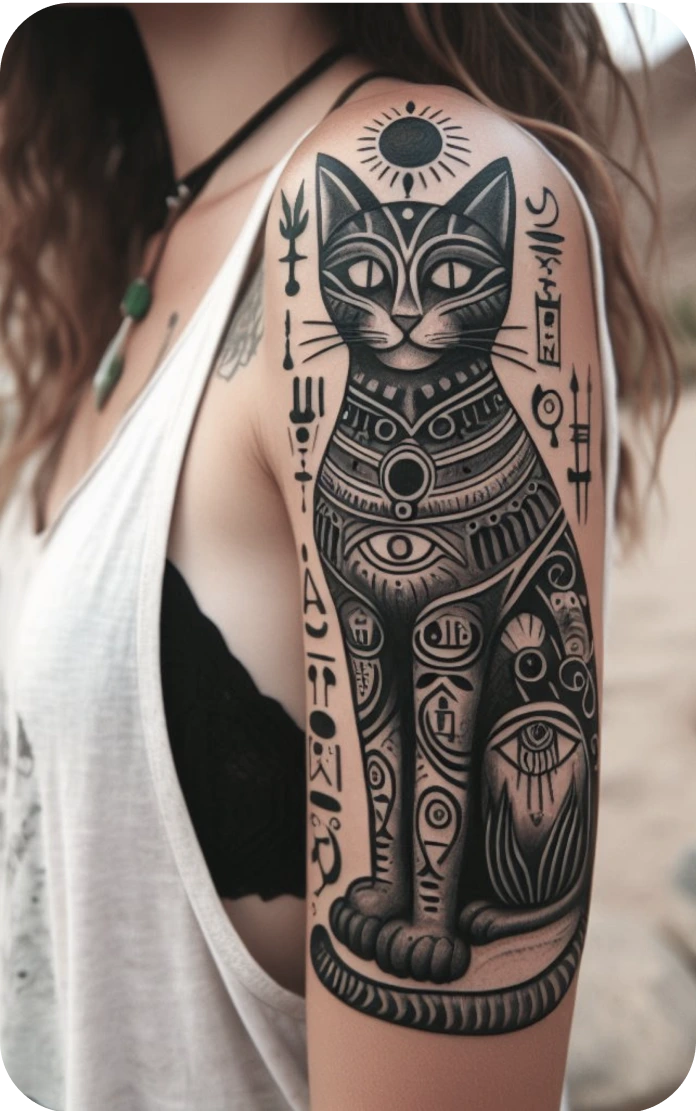 Research on technical limitations shows that the current tattoo generator ai has a size deviation rate of 31.5% when handling the adaptation of three-dimensional human body surfaces, and only reaches the level of 85% of human artists in terms of the naturalness of color transition. Customer research data shows that although 63.8% of customers accept the use of AI for creative inspiration, 79.2% of them still require human artists to do manual optimization when making the final decision. These data indicate that AI technology and traditional hand-drawing skills are forming a new industry ecosystem that is complementary and symbiotic.
Analysis of future development trends indicates that by 2026, the coverage rate of AI-assisted design in the tattoo industry is expected to reach 68-75%, but the probability of it completely replacing hand-drawn sketches is still less than 15%. The focus of technological innovation is shifting from pattern generation to the field of intelligent adaptation. The new generation of systems is integrating 3D body-sensing scanning and skin mechanics simulation technologies, increasing the design accuracy to 92.7%. As the industry forecast released at the International Tattoo Expo Technology Summit indicates, the creative workflow of human-machine collaboration will become the mainstream model. This collaborative creation approach is expected to shorten the artistic creation cycle by 60% while maintaining 87% of artistic expressiveness.
Research on technical limitations shows that the current tattoo generator ai has a size deviation rate of 31.5% when handling the adaptation of three-dimensional human body surfaces, and only reaches the level of 85% of human artists in terms of the naturalness of color transition. Customer research data shows that although 63.8% of customers accept the use of AI for creative inspiration, 79.2% of them still require human artists to do manual optimization when making the final decision. These data indicate that AI technology and traditional hand-drawing skills are forming a new industry ecosystem that is complementary and symbiotic.
Analysis of future development trends indicates that by 2026, the coverage rate of AI-assisted design in the tattoo industry is expected to reach 68-75%, but the probability of it completely replacing hand-drawn sketches is still less than 15%. The focus of technological innovation is shifting from pattern generation to the field of intelligent adaptation. The new generation of systems is integrating 3D body-sensing scanning and skin mechanics simulation technologies, increasing the design accuracy to 92.7%. As the industry forecast released at the International Tattoo Expo Technology Summit indicates, the creative workflow of human-machine collaboration will become the mainstream model. This collaborative creation approach is expected to shorten the artistic creation cycle by 60% while maintaining 87% of artistic expressiveness.
Research on technical limitations shows that the current tattoo generator ai has a size deviation rate of 31.5% when handling the adaptation of three-dimensional human body surfaces, and only reaches the level of 85% of human artists in terms of the naturalness of color transition. Customer research data shows that although 63.8% of customers accept the use of AI for creative inspiration, 79.2% of them still require human artists to do manual optimization when making the final decision. These data indicate that AI technology and traditional hand-drawing skills are forming a new industry ecosystem that is complementary and symbiotic.
Analysis of future development trends indicates that by 2026, the coverage rate of AI-assisted design in the tattoo industry is expected to reach 68-75%, but the probability of it completely replacing hand-drawn sketches is still less than 15%. The focus of technological innovation is shifting from pattern generation to the field of intelligent adaptation. The new generation of systems is integrating 3D body-sensing scanning and skin mechanics simulation technologies, increasing the design accuracy to 92.7%. As the industry forecast released at the International Tattoo Expo Technology Summit indicates, the creative workflow of human-machine collaboration will become the mainstream model. This collaborative creation approach is expected to shorten the artistic creation cycle by 60% while maintaining 87% of artistic expressiveness.