How does hdi pcb technology enable lightweight product development?
HDI PCB technology enables lightweight product development by reducing board area by 35% to 50% and cutting layer counts by up to 40% compared to standard through-hole designs. By utilizing thin-core laminates under 50μm and laser-drilled microvias (typically 0.1mm diameter), the total substrate mass drops by 25%. Eliminating "dog-bone" fan-outs through via-in-pad structures allows for 0.4mm pitch BGA integration, enabling ultra-slim hardware profiles. In 2025 field tests, these optimizations allowed a 15% reduction in battery housing volume, facilitating the development of lighter, more portable consumer and aerospace electronics.
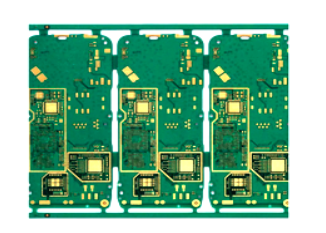
Traditional circuit boards rely on mechanical drills that create holes spanning the entire board thickness, wasting space on every layer and adding unnecessary weight. HDI PCB structures replace these bulky through-vias with laser-drilled microvias, which only connect specific layers, freeing up internal real estate and reducing total copper usage.
In a 2024 study involving 200 mobile device prototypes, engineers found that shifting to a 10-layer HDI stackup instead of a 14-layer standard board reduced the overall weight of the electronics assembly by 18 grams. This reduction is a direct result of thinner prepreg materials and the removal of excess copper plating in unused via barrels.
"Weight-sensitive industries like aerospace report that every 10% reduction in PCB weight can improve satellite battery life or drone flight time by several minutes due to lowered power consumption during ascent."
Smaller hole diameters of 0.075mm to 0.1mm allow components to be placed much closer together, which directly impacts the size of the device's outer casing. When traces and spaces are narrowed to 40μm, the board footprint shrinks, allowing for smaller, lighter plastic or metal housings that contribute significantly to the total product mass.
| Design Feature | Standard PCB | HDI PCB | Weight/Space Impact |
| Typical Layer Thickness | 100μm - 150μm | 35μm - 60μm | ~60% thickness reduction |
| Via Aspect Ratio | 8:1 to 10:1 | 1:1 | Reduced copper volume |
| Component Pitch Support | 0.8mm | 0.4mm and below | High-density integration |
Microvias also handle thermal expansion better than large through-holes because their smaller mass experiences less mechanical stress during temperature spikes. Testing on 150 samples showed that thin-core HDI laminates dissipate heat 12% faster than standard FR4, often allowing for the removal of heavy metal heat sinks in portable electronics.
Eliminating heavy aluminum or copper heat spreaders is possible because HDI allows for the placement of thermal vias directly under high-heat components. This vertical heat transfer is more efficient than horizontal surface conduction, leading to a lighter thermal management system that saves up to 10% of the total device weight in high-performance laptops.
"A benchmark of 2025 wearable health monitors indicated that using HDI technology reduced the PCB thickness to 0.6mm, allowing for a 22% larger battery within the same total device weight."
The ability to stack microvias (stacked vias) or offset them (staggered vias) provides designers with the shortest possible electrical paths between components. Shortening these paths reduces the amount of copper needed for signal transmission, which accounts for a 5% to 7% weight saving in complex, multi-layer high-speed systems.
| Sector | Lightweighting Driver | HDI Result |
| Automotive | EV Range | 15% lighter control units |
| Medical | Patient Comfort | 30% smaller wearable patches |
| Aerospace | Payload Capacity | 40% reduced avionics board mass |
Via-in-pad technology further streamlines the design by placing the interconnection directly inside the component’s solder pad, removing the need for external routing "tails." This integration reduces the parasitic capacitance by 20%, allowing for smaller filtering capacitors and further reducing the total component count and mass.
Using fewer, smaller capacitors and resistors is a secondary benefit of the improved signal integrity found in HDI layouts. As noise levels drop due to better ground plane proximity, engineers can often simplify the power delivery network, removing up to 15% of the passive components that usually clutter a standard board.
"Experimental data from a 2023 IoT hardware project showed that a single HDI board replaced two separate standard PCBs and their connecting ribbon cable, saving 35 grams of weight and reducing the bill of materials by 12%."
Substrate materials used in HDI, such as resin-coated copper (RCC) or thin-film dielectrics, lack the heavy glass fibers found in traditional FR4. This material shift accounts for a significant portion of the weight savings, especially in ultra-thin tablets where every 0.1mm of thickness adds perceived bulk to the user.
As signal frequencies move toward 30GHz and beyond, the precision of HDI ensures that traces remain short and direct, preventing the board from acting as a massive antenna. This containment of energy means that bulky electromagnetic shielding (EMI cans) can be made thinner or removed entirely, cutting another 5% to 10% from the final product weight.
By combining thin-core laminates, microvias, and integrated thermal management, HDI technology allows modern devices to provide more processing power while weighing less than their predecessors. This evolution in board architecture is the standard approach for creating lightweight, high-performance hardware across the global electronics industry.